Ugly or misunderstood? : Why Bingo's New EV Might Be the Smartest-Looking Car in Kenya
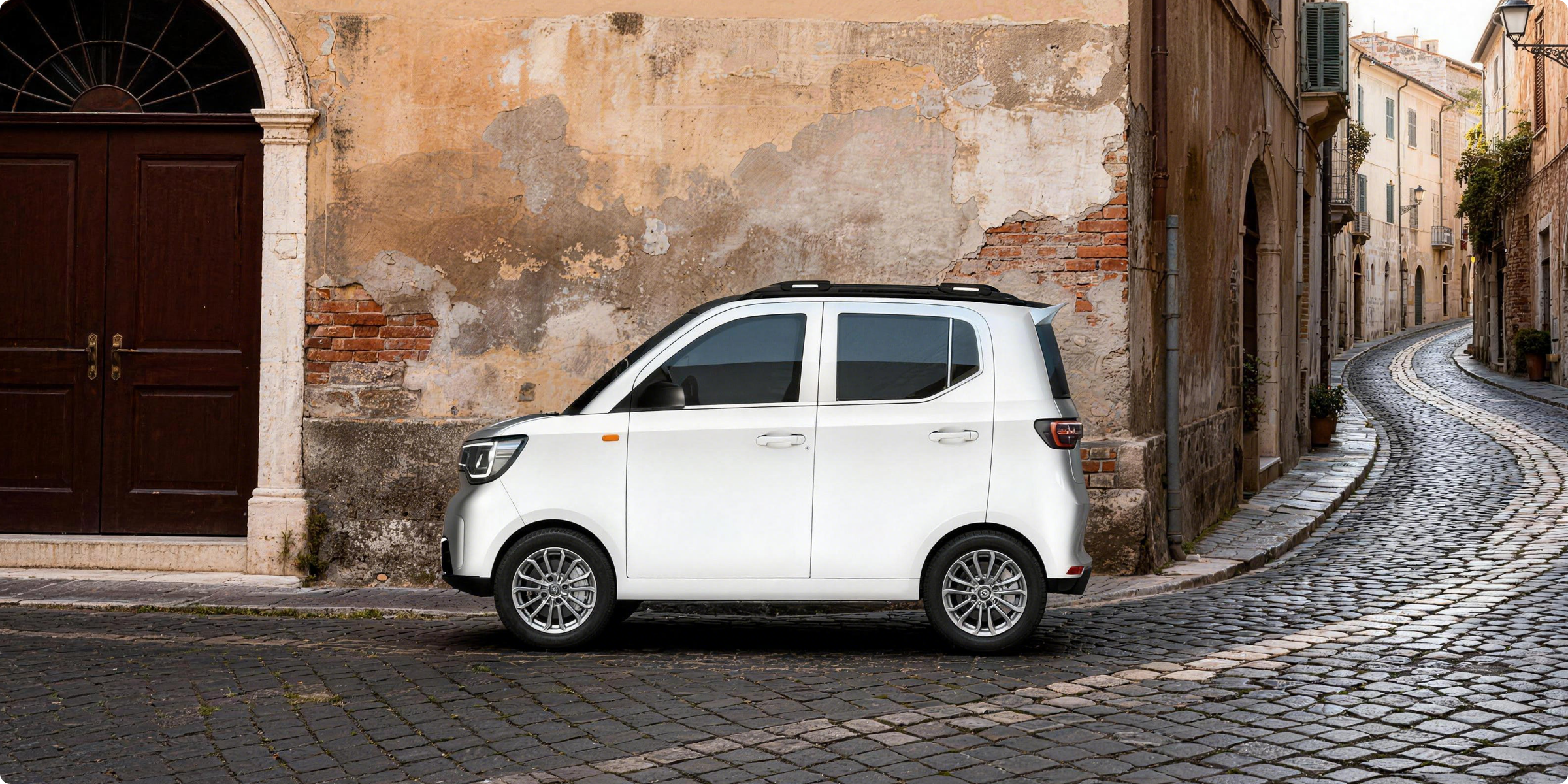
Kenya's first swappable-battery car has landed, and it's not winning any beauty contests. Here's why that might be the smartest part of the whole thing.
Ugly or misunderstood: Why Bingo's New EV Might Be the Smartest-Looking Car in Kenya
Bingo — and no, not the four-legged one snoring under your dining table — has just walked into Kenya's EV space, and it's brought a car that only a spec sheet could love. The Bingo E2 is boxy. It's stubby. It looks like it was sketched by someone handed a napkin, a deadline, and the single instruction "car." If you buy vehicles to be seen in them, this isn't your car. But spend a few minutes looking past the face, and there's a feature here that no other four-wheeler in the country currently offers. Swappable batteries.
What Bingo Actually Brought to the Table
Bingo Technologies is a California outfit built by Daniel Huang — better known as the founder of mophie, the phone-case-and-charger brand many of us have owned without realizing the connection — alongside co-founder Christian Scheder. Nairobi got the honor of hosting the unveiling, with Kenya and South Africa marking Bingo's first African footholds.
The E2 itself is a compact four-seater, but the party trick isn't seating capacity. It's the ability to roll up to a swap station, exchange a drained battery module for a charged one in about two minutes, and drive off — no cable, no wait, no queueing behind someone's slow charge cycle.
Two Batteries, One Car
The engineering behind it is a dual-battery arrangement: one battery is permanently fixed into the car, and four smaller modules sit alongside it and can be swapped out entirely. Bingo says the combined setup is good for up to 440 km of range. On its own, the fixed battery covers roughly 310 km, charges to 80% in under an hour on a DC fast charger, or tops up fully overnight on a regular home outlet in about six hours.
There's a smart little extra baked in too — the AC charging port can apparently be used to send power to a second Bingo vehicle directly, so one E2 owner could rescue another one stranded without a nearby swap point. And the battery modules themselves aren't locked to the car; they're built to also slot into Bingo's electric motorcycles and bikes, plugging straight into the two- and three-wheeler swap ecosystem that companies like Spiro, Ampersand, and Arc Ride have already been building across the country.
Who Actually Needs This Car
This isn't a family runabout or a weekend cruiser. Bingo has been upfront that the E2 is built for one type of buyer: the ride-hailing or delivery driver whose earnings depend entirely on how many hours the car is actually moving instead of parked at a charger. Every minute spent waiting to charge is a minute nobody's paying for, and on a rough shift, once fuel and platform commissions are deducted, a driver running a petrol car in Nairobi can be left with barely more than a thousand shillings.
Bingo's own projections claim that cutting fuel costs and downtime could nearly double a driver's take-home pay over a year, compared to running a similar petrol vehicle. That's a bold number, and like any manufacturer's math, it deserves a healthy dose of skepticism until it's tested against actual Nairobi traffic, actual queues at swap points, and actual battery wear a few years down the line.
To make the entry cost less painful, Bingo is separating what you pay for the car from what you pay for the battery, using a subscription-style battery model plus lease-to-own financing through local partners. Pre-orders are open now at an estimated KES 1.8 million, with the first units expected in the country later this year and local assembly targeted for around the end of 2026.
What Real Drivers Already Know About Going Electric
Here's the honest caveat: nobody in Kenya has driven a four-wheeled EV for Uber or Bolt long enough to have real numbers on it yet — the E2 hasn't hit the road. But the closest real-world preview comes from the two-wheeler side, where electric has already been tested at scale on these same platforms.
Take Jacob Sikunyi, a boda-boda rider in Nairobi who switched from a petrol motorbike to an electric one. By his own account, according to an article by the Christian Science Monitor, May 28, 2026, charging now costs him roughly a third of what fuel used to, which lets him undercut his old fares by 10 to 20% and still come out ahead. It isn't a free lunch, though — his electric bike cost about double what a comparable petrol one would have, a hidden upfront expense his passengers never see. Other riders on the platforms have pushed back harder, arguing the running-cost savings, while real, aren't dramatic enough to justify the pay cuts some feel they've absorbed in the shift to electric. It's a mixed picture, and it's coming from bikes, not cars. But it's a fair preview of the trade-offs an E2 driver will likely face too: real fuel savings, a steeper upfront cost, and a payoff that depends heavily on how reliable the swap network actually turns out to be.
The Network Is the Real Product
A car built around battery swapping is only as strong as the swap network behind it, and that's really the whole ballgame here. Bingo says it's rolling out swap stations, DC fast chargers, and roadside battery support nationally, starting with a modest 10 to 20 imported units before scaling toward a stated target of 10,000 EVs on Kenyan roads by the end of 2028.
That's an ambitious curve for a grid that still has to prove it can absorb concentrated charging demand without local brownouts wherever these stations cluster. Swapping has already worked for Kenya's electric boda-boda scene, where the batteries are small and manageable. Doing the same at four-wheeler scale, with bigger packs and higher stakes, is a genuinely harder logistics problem — and it's the one Bingo has staked its entire Kenyan launch on solving before anyone else in the space gets there first.
Back to That Face
So yes, the E2 looks like it was designed for an engineering brief rather than a magazine spread. Maybe that's exactly the point. It isn't chasing status — it's closer to a boda rider's helmet: unglamorous, built to survive a twelve-hour shift, and expected to pay for itself. Kenya's EV numbers explain why now is the moment for a bet like this. Registered electric vehicles have jumped from around 1,378 in 2022 to more than 39,000 by 2025, and government policy is actively pushing incentives for local assembly and charging infrastructure. Bingo has walked in right as that door swung open.
Whether the E2 becomes a familiar sight on Nairobi roads or a footnote in Kenya's EV story has nothing to do with how it looks. It comes down to whether Bingo can build the swap network it's promising, at the speed it's promising, before drivers' patience — and their fuel bills — run out first.
Ugly? Sure. Irrelevant? Not even close.
Would you pre-order one, or wait to see it on the road first? Drop your thoughts below.
Written by
Leon KariukiComments (3)
- Wangui6 Aug 2026
Why the steep upfront costs though? with 1.8 million a cab driver can easily a hybrid vehicle with a high performing battery that offers better range and improved fuel economy
- Eng. Kobia7 Aug 2026
The tradeoff here isn't necessarily on the fuel costs but this car being brand new ( 0 mileage) it comes with a warranty from the manufacturer
 Buyabo Muleme3 Aug 2026
nice dissection. can't wait to see how it fairs in the market