AI Data Centres Are Reshaping Global Energy Demand. Is Your Home Ready?
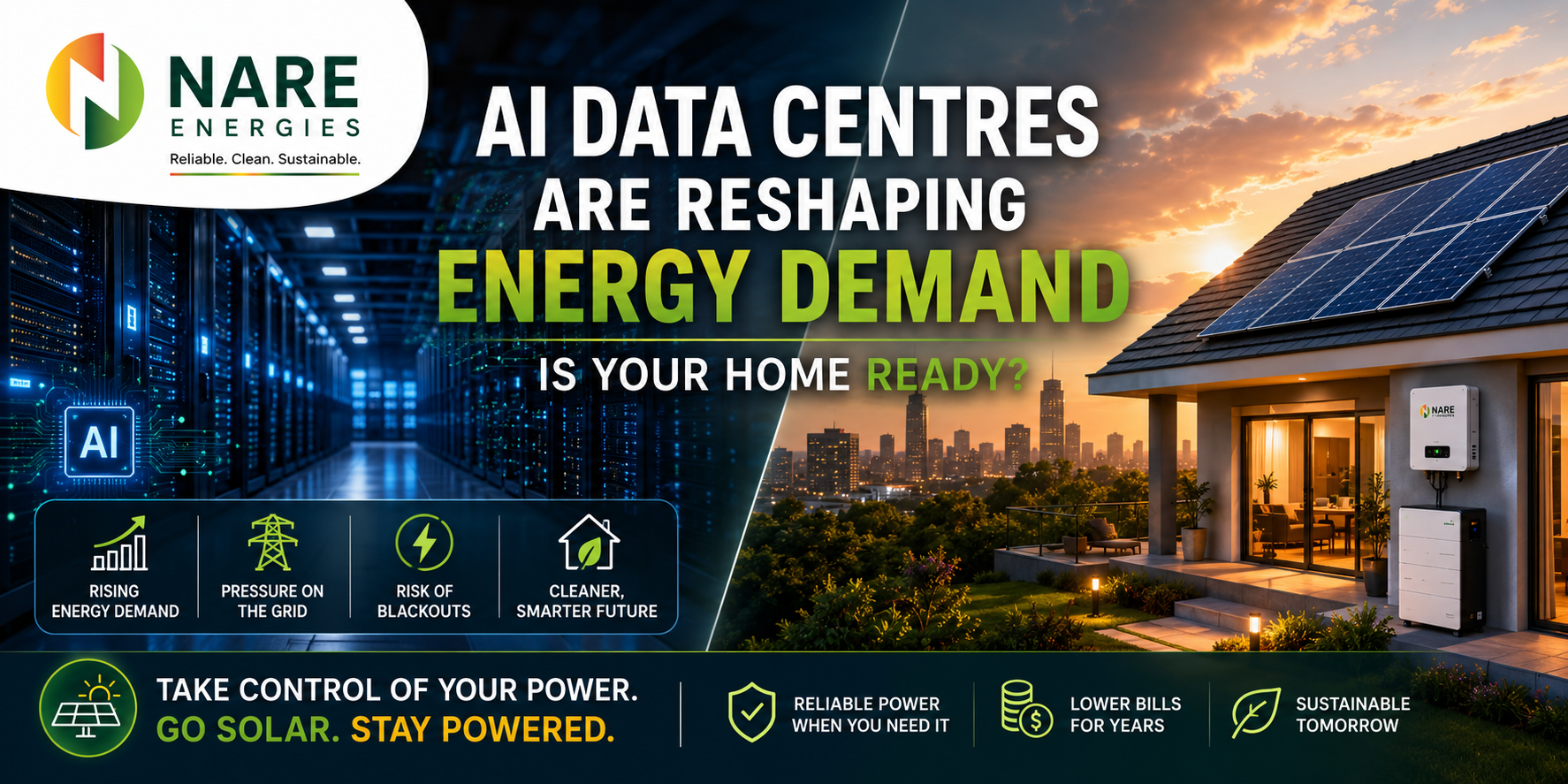
Artificial Intelligence (AI) has quickly become part of our everyday lives. From ChatGPT and AI-powered search engines to autonomous vehicles, healthcare diagnostics, and business automation, AI is transforming every industry. But behind every AI prompt lies a hidden reality: massive data centres consuming enormous amounts of electricity.
AI Data Centres Are Reshaping Global Energy Demand — Is Your Home Ready?
Artificial Intelligence (AI) has quickly become part of our everyday lives. From AI assistants and smart search engines to healthcare diagnostics, logistics, finance, and automation, AI is transforming every industry. But behind every AI application lies a hidden reality: massive data centres consuming enormous amounts of electricity.
As countries race to build AI infrastructure, national power grids are facing unprecedented pressure. While governments and utilities work to expand generation capacity, homeowners are increasingly vulnerable to power shortages, blackouts, and rising electricity costs.
This is why investing in residential solar is no longer just about saving money—it is about ensuring energy security.
The AI Revolution Runs on Electricity
AI does not exist in the cloud. It runs on thousands of powerful servers housed inside large-scale data centres.
According to the International Energy Agency (IEA), data centres consumed roughly 415 terawatt-hours (TWh) of electricity in 2024, and that demand is projected to grow dramatically by 2030 as AI adoption accelerates worldwide.
To put that into perspective:
- AI servers consume significantly more power than traditional computing servers.
- Modern AI data centres can require electricity comparable to that used by entire towns or cities.
- Every AI-generated image, search query, recommendation, and chatbot conversation adds to the demand for electricity.
- AI is becoming one of the fastest-growing drivers of global electricity demand.
The rapid growth of artificial intelligence means the world's energy infrastructure must expand just as quickly to keep pace.
How AI Data Centres Affect the National Grid
Electricity grids are designed around predictable growth. AI has changed that.
Unlike residential neighbourhoods that expand gradually over many years, a single AI data centre can suddenly require hundreds of megawatts of new power capacity. This creates several challenges.
Increased Pressure on Grid Infrastructure
Utilities must upgrade transmission lines, substations, transformers, and power generation facilities to support new AI data centres. These upgrades require billions of dollars in investment and often take years to complete.
Higher Risk of Power Shortages
When electricity demand grows faster than supply, utilities may be forced to implement:
- Load shedding
- Power rationing
- Scheduled maintenance outages
- Delays in connecting new customers
Several countries have already delayed or restricted new AI data centre developments because their electrical infrastructure cannot support the additional demand.
Rising Electricity Costs
Meeting the growing energy requirements of AI means investing in:
- New power generation plants
- Grid expansion
- Battery storage systems
- High-voltage transmission infrastructure
These investments are often reflected in higher electricity tariffs for homes and businesses.
What This Means for Kenyan Homes
Kenya has one of Africa's cleanest electricity grids, powered largely by geothermal, hydroelectric, wind, and solar energy.
This is an incredible achievement.
However, Kenya is also experiencing:
- Rapid urbanisation
- Population growth
- Increased industrial activity
- Expansion of digital infrastructure
- Growing adoption of AI technologies by businesses and institutions
As AI-powered services continue expanding across Africa, electricity demand will continue to rise. Although Kenya continues investing in new generation capacity, homeowners remain vulnerable to power interruptions, maintenance outages, and future electricity price increases.
Relying entirely on the national grid is becoming an increasingly risky strategy for households that depend on reliable electricity for work, education, security, and daily living.
Residential Solar: Your Personal Energy Security Plan
Rather than waiting for the grid to catch up, homeowners can take control of their own energy future.
A professionally designed residential solar system provides long-term energy security while significantly reducing dependence on the national grid.
Reliable Backup During Blackouts
With a hybrid inverter and battery storage system, essential appliances continue operating even when grid power fails.
Imagine keeping your:
- Lights on
- Wi-Fi and internet running
- Home office operational
- Security systems active
- Refrigerators and freezers powered
while the surrounding neighbourhood experiences a blackout.
Lower Monthly Electricity Bills
Every unit of electricity produced by your solar panels is electricity you don't have to purchase from the grid.
As electricity prices continue to rise, your savings continue to grow year after year.
Greater Energy Independence
Generating your own clean electricity means you are less affected by:
- Power rationing
- Unexpected outages
- Rising electricity tariffs
- Future pressure on the national grid
It is one of the smartest long-term investments a homeowner can make.
AI Is Here to Stay — Your Energy Strategy Should Be Too
Artificial intelligence will continue transforming how we work, learn, communicate, and conduct business.
The demand for electricity will only continue increasing.
Governments and utility companies will continue strengthening national grids, but these projects require significant time and investment.
Homeowners do not have to wait.
By installing a residential solar system today, you can enjoy:
- Greater energy independence
- Lower monthly electricity bills
- Reliable backup power
- Increased property value
- Long-term protection against future energy uncertainty
- A cleaner and more sustainable lifestyle
Instead of worrying about the next blackout, your home can become its own reliable power station.
Future-Proof Your Home with Nare Energies
At Nare Energies, we design and install high-performance residential Solar PV systems specifically tailored for Kenyan homes.
Whether you're looking to reduce your electricity bills, secure backup power during outages, or achieve complete energy independence, our experienced team will help you find the perfect solution.
Why Homeowners Choose Nare Energies
- ✅ Professionally designed residential Solar PV systems
- ✅ Hybrid solar systems with battery backup
- ✅ Premium-quality components from trusted manufacturers
- ✅ Expert installation by certified technicians
- ✅ Reliable after-sales support and maintenance
- ✅ Solutions customized to your home's energy needs
Ready to Take Control of Your Power?
Don't wait until the next blackout to think about energy security.
Invest in clean, reliable, and affordable solar energy today.
👉 Explore our Residential Solar PV Systems
https://www.nare.co.ke/services/solar-pv-systems
📞 Contact our team today for a free consultation and discover how much you could save by switching to solar.
Nare Energies
Powering Kenyan Homes for a Smarter, Greener, and More Resilient Future.
Written by
Buyabo MulemeAn energy engineer, PV specialist and renewable energy advocate. He also serves as the CTO of NARE Energies.
Comments (1)
- Edwin Mugure22 Jul 2026
I look forward to having AI data centres in Kenya even though their energy demand is crazy. We can switch residential demand to solar and wind plants and leave geothermal to power data centres