Commercial Solar for Kenyan Businesses: Cutting Power Costs Without Downtime

How Kenyan shops, schools, clinics, hotels and factories use rooftop solar to cut electricity bills and survive outages — sizing, costs from KSh 1.1M, and how to avoid downtime.
For most Kenyan businesses, electricity is a top-three operating cost — and an operational risk. Rooftop solar addresses both. Here is how commercial solar actually works in practice.
The commercial advantage: your load matches the sun
Homes consume most of their power at night. Businesses consume most of theirs between 8am and 6pm — exactly when solar produces. That alignment is why commercial payback is typically faster than residential: a much larger share of generated energy is used on site, immediately, without needing storage.
Which businesses benefit most
- Retail shops and supermarkets — refrigeration and lighting run all day
- Schools and colleges — daytime load, large unshaded roofs
- Clinics and pharmacies — cold chain that cannot fail
- Hotels and guesthouses — hot water plus 24-hour lighting
- Workshops and light manufacturing — motors, compressors, tools
- Agribusiness — irrigation pumps, cold rooms, milk chilling
Three system types to choose from
1. Grid-tie (no batteries). Cheapest per kW and fastest payback. Offsets your daytime consumption but shuts down during an outage. Good for businesses that already have reliable supply and simply want lower bills.
2. Hybrid with LiFePO4 storage. Panels feed the load, surplus charges batteries, and the site rides through outages seamlessly. This is our most requested commercial configuration in Kenya.
3. Solar plus generator integration. For sites with existing gensets, solar dramatically reduces diesel hours. The controller prioritises solar, then battery, then genset.
Sizing a commercial system
We size from measured data rather than assumptions:
- Pull twelve months of bills to establish kWh consumption and peak demand.
- Log the load profile where possible, to see when consumption actually peaks.
- Survey the roof — area, orientation, pitch, shading, and structural capacity.
- Model the array against that profile so you self-consume as much as possible.
- Add storage only for the loads that genuinely cannot go dark.
A common outcome: cover the daytime baseline with solar, back up only the critical circuits, and leave the rare peak loads on the grid.
What it costs
Our turnkey commercial packages start at:
| Package | Typical fit | Price (KSh) |
|---|---|---|
| Business Premium | Shops, clinics, small offices | 1,100,000 |
| Business Ultimate | Warehouses, hotels, schools | 2,300,000 |
Larger installations are engineered and quoted per site. Every commercial quote we issue itemises panels, inverters, storage, mounting, protection, labour and commissioning, so you can compare like with like.
Installing without stopping operations
Downtime is the objection we hear most, and it is manageable:
- Mounting, cable trays and conduit are installed while you trade normally
- Only the final tie-in requires a shutdown, typically a few hours
- We schedule changeover for evenings, weekends or a planned low-activity window
- Critical loads such as cold rooms are transferred first and tested before handover
What to demand from any commercial installer
- A structural assessment of the roof, in writing
- Component datasheets and warranties for panels, inverters and batteries
- Surge and lightning protection appropriate to your location
- Monitoring so you can see generation and consumption per day
- A clear operations and maintenance plan, including panel cleaning intervals
Start with the numbers
Run your major loads through our solar sizing calculator for an indicative array, inverter and battery specification, then download the branded PDF for your board or finance team.
When you are ready for a measured proposal, request a commercial site survey and we will quote against your actual consumption data.
Written by
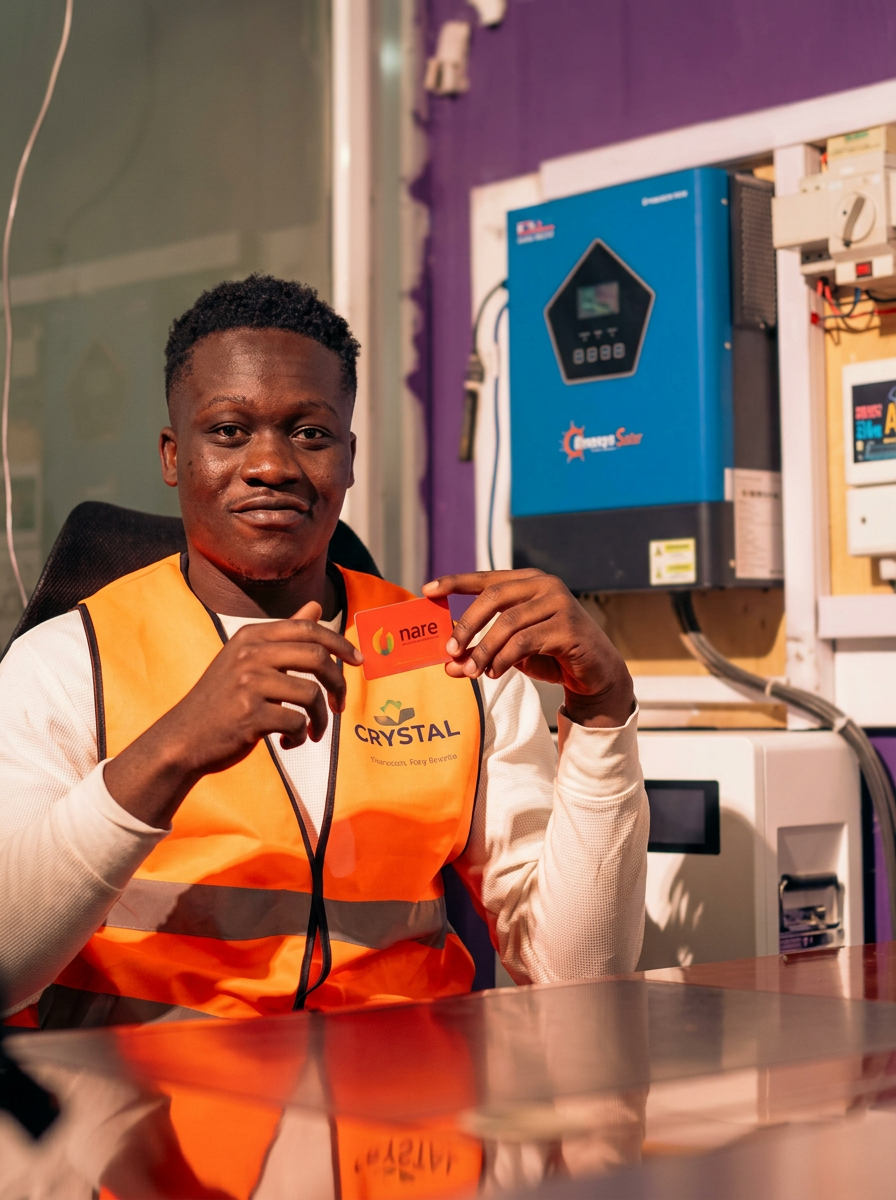
Buyabo MulemeAn energy engineer, PV specialist and renewable energy advocate. He also serves as the CTO of NARE Energies.
Comments (0)
Be the first to comment.